Truman and the Hiroshima cult
- Pages
- 282
- 2 editions
- First published
- 1995
- 1 language
Join or log in to shelve and rate Free, no password.
Overview
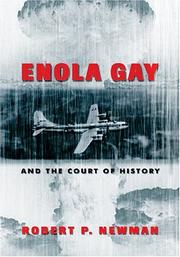
The United States dropped atomic bombs on Japan in 1945 to end World War II as quickly and with as few casualties as possible. That is the compelling and elegantly simple argument Robert Newman puts forward in his controversial new study of World War II's end, Truman and the Hiroshima Cult. Simply stated, Newman argues that Truman made a sensible military decision. As commander in chief, he was concerned with ending a devastating and costly war as quickly as possible and with saving millions of lives.
Yet, Newman goes further in his discussion, seeking the reasons why so much hostility has been generated by what happened in the skies over Hiroshima and Nagasaki in early August 1945. The source of discontent, he concludes, is a "cult" that has grown up in the United States since the 1960s. It was weaned on the disillusionment spawned by concerns about a military industrial complex, American duplicity and failure in the Vietnam War, and a mistrust of government following Watergate.
The cult has a shrine, a holy day, a distinctive rhetoric of victimization, various items of scripture and, in Japan, support from a powerful Marxist constituency.
Ratings & reviews
Log in to rate or review this book.
No written reviews yet.
Discussions
Talk about this book with other readers.
Log in to start a discussion.
No discussions yet.
Editions
-
Format not known Michigan State University Press 1995 292 pages English ISBN 9780870139406 Open Library
-
Format not known Michigan State University Press 1995 272 pages English ISBN 9780870134036 Open Library

Details & links
- First published
- 1995
- Pages
- 282
- Languages
- Available in 1 language
Where to buy this book: see “Buy this book”
More about this book
Read a sample, borrow it or see other editions → openlibrary.org