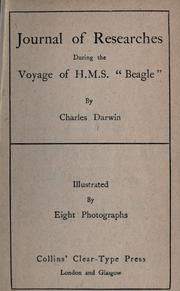
Reise eines Naturforschers um die Welt
- Pages
- 552
- 13 editions
- First published
- 1844
- 8 languages
Join or log in to shelve and rate Free, no password.
Overview
Charles Darwin, at age 22, had by 1831 rejected careers in both medicine and the clergy when he was offered the position of naturalist aboard the HMS Beagle, a 90-foot sloop charged with charting South American waters. He was not the first choice for the job. His father stood in his way. Even the ship's captain was uncertain about him. Yet he made it onto the Beagle, and this five year voyage, he later wrote, was the most important event of his life and shaped his entire career. This was a return trip to South America for the Beagle and Darwin left the placid landscape of England to journey to a land of dynamic terrain: high mountains, earthquakes, volcanoes, strange coastlines and even stranger animals and fossils. Darwin spent thousands of hours making observations, collecting specimens, and recording data. He went ashore all along the South American coasts, often riding horseback into the interior in order to collect more data, and he also includes his observations about the people whom he met there, from army generals to local Indians. And of course, he visited the now famous Galapagos Archipelago, the 10 islands formed by volcanic action where Darwin noticed that several species of finches existed, with beak shapes that were vastly different. He thought deeply about the comment made by the vice-governor that there were many different varieties of tortoises to be found on the island, and came to the conclusions about evolution he later elaborated upon in his Origin of Species: "It was most striking to be surrounded by new birds, new reptiles, new shells, new insects, new plants, and yet by innumerable trifling details of structure, and even by the tones of voice and plumage of the birds, to have the temperate plains of Patagonia, or rather the hot dry deserts of Northern Chile, vividly brought before my eyes. Why, on these small points of land, which within a late geological period must have been covered by the ocean, which are formed by basaltic lava, and therefore differ in geological character from the American continent, and which are placed under a peculiar climate, -- why were their aboriginal inhabitants, associated, I may add, in different proportions both in kind and number from those on the continent, and therefore acting on each other in a different manner -- why were they created on American types of organization?" The Beagle went back to England via Australia and New Zealand, and Darwin continued to collect specimens there as well. He left England as student with a keen and open mind; he returned an experienced scientist with definite ideas about the workings of nature, and raw data to substantiate his theories. He would go on of course to refine them and publish On the Origin of Species by means of Natural Selection, that famous and still controversial book. The direction of Darwin's thought is clearly evident in The Voyage of the HMS Beagle, as well as his exuberance. This is the second edition of the book, originally published in 1845. Fascinating reading from a truly original mind!
Ratings & reviews
Log in to rate or review this book.
No written reviews yet.
Discussions
Talk about this book with other readers.
Log in to start a discussion.
No discussions yet.
Editions
-
Format not known E. Schweizerbart'sche Verlagsbuchhandlung (Nägele & Dr. Sproesser) 1910 568 pages German Open Library
Details & links
- First published
- 1844
- Pages
- 552
- Series
- Darwin's biologische meesterwerken (book 7)
- Languages
- Available in 8 languages
Where to buy this book: see “Buy this book”
More about this book
Read a sample, borrow it or see other editions → openlibrary.org