The serpents of paradise
- Pages
- 400
- 2 editions
- First published
- 1995
- 1 language
Join or log in to shelve and rate Free, no password.
Overview
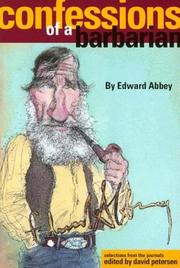
From boyhood in Home, Pennsylvania, to his death in Tucson, Arizona, in 1989, this book offers - in Abbey's own words - the world of an American original. Whether writing fact or fiction, Abbey was always an autobiographer. Each of the thirty-five selections presented here, arranged chronologically by date of incident (not of publication), demonstrates that Abbey was passionately, insistently his own man.
As poet-farmer Wendell Berry puts it: "He remains Edward Abbey, speaking as and for himself, fighting, literally, for dear life ... for the survival not only of nature, but of human nature, of culture, as only our heritage of works and hopes can define it.".
To speak for the voiceless was his mission. He was a virtuoso of the well-phrased thought in which style and content, symbol and meaning - each imbued with humor - come together to defy the powerful, reminding us always that preservation of wild nature is a key to a free spirit.
And along with Emerson and Thoreau, Abbey, the uncompromising stylist, knew that the corruption of language follows the corruption of man. "Language," Abbey wrote, "seeks to transcend itself, 'to grasp the thing that has no name.'"
Ratings & reviews
Log in to rate or review this book.
No written reviews yet.
Discussions
Talk about this book with other readers.
Log in to start a discussion.
No discussions yet.
Editions


Details & links
- First published
- 1995
- Pages
- 400
- Languages
- Available in 1 language
Where to buy this book: see “Buy this book”
More about this book
Read a sample, borrow it or see other editions → openlibrary.org