Talisman
- Pages
- 562
- 7 editions
- First published
- 2004
- 1 language
Join or log in to shelve and rate Free, no password.
Overview
A roller coaster intellectual journey through the back streets and rat runs of history to uncover the traces in architecture and monuments of a secret religion that has shaped the world.
Review
Praise for Graham Hancock:
“A reading experience of pure gold.... History buffs, Bible scholars, anyone who likes a great intellectual detective yarn will plunge into The Sign and the Seal and not come up for air until the end.”
—Seattle Times
“Provocative.”
—The Globe and Mail
“Even if you are a confirmed skeptic, Hancock should give you pause for thought.”
—Rocky Mountain News (Denver)
“An entertaining writer and an interesting cultural journalist.”
—Publishers Weekly
Goodreads Reviewer: Tony
Recommends it for: Anyone interested in religious traditions & symbols
This is perhaps the most comprehensive book I have ever read on religious traditions and symbolism. More specifically, the book deals with alternative/shadow western religious followings, from the Egyptian Goddess, Isis, to Christian Gnostics to Christian Cathars of the Middle Ages to the Knights Templar who came out of Cathar traditions to Masonic Traditions in Europe and later in the United States. The book draws parallels to many religious symbols in cities across the western world, particularly obelisks in Alexandria, Egypt, Vatican City, Paris, New York and Washington, DC. No book could be a better source of information for novelist Dan Brown, and I would be surprised if he has not read or used Talisman to gather information for much of his writings.
From Publishers Weekly
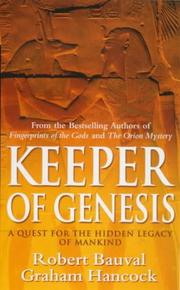
This sprawling conspiracy theory traces the influence of ancient Egyptian and gnostic ideologies concerning a dualistic, Manichean cosmos prefiguring the earthly order, knowable only through secret, magical lore from medieval Catharism to the French vogue for pharaonic monuments and deities, the astrologically suggestive layouts of Paris and Washington, and the Statue of Liberty (the "Isis of New York"). The conventional explanation for the historical recurrence of gnostic themes and Egyptian iconography—that people peruse old texts and art works and adapt their ideas and symbols to new purposes—strikes Hancock and Bauval (coauthors of Keeper of Genesis) as inadequate. They discern the millennia-long plot of a shadowy gnostic "Organization" working through usual suspects like the Freemasons, whose hidden hand they see influencing everything from the French Revolution to the founding of Israel. The authors draw eye-glazing webs of connections between historical coincidences—some intriguing, others tenuous and forced—to insinuate a "not altogether impossible" master plan. But their proposed conspiracy never gels.
Its guiding philosophies, Christian gnosticism and pagan occultism, don't really mesh, and its agenda seems no more coherent than a perennial opposition to the alleged intolerance and obscurantism of the Catholic Church. The book's crude anticlericalism and conviction that culture propagates by conspiratorial, not intellectual, processes make it a distortion of the gnostic mindset.
Ratings & reviews
Log in to rate or review this book.
No written reviews yet.
Discussions
Talk about this book with other readers.
Log in to start a discussion.
No discussions yet.
Editions


Details & links
- First published
- 2004
- Pages
- 562
- Languages
- Available in 1 language
Where to buy this book: see “Buy this book”
More about this book
Read a sample, borrow it or see other editions → openlibrary.org