Philosophy & ReligionPolitics & Society
Philosophy and the idea of freedom
- Pages
- 202
- 3 editions
- First published
- 1991
- 1 language
Join or log in to shelve and rate Free, no password.
Overview
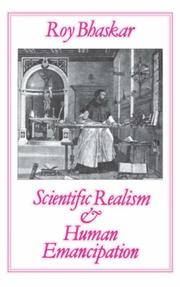
In Philosophy and the Idea of Freedom Roy Bhaskar sets out to develop a critique of the work of Richard Rorty, who must be one of the most influential authors of recent decades. In a brilliant tour de force, Bhaskar shows how Rorty falls victim to the very epistemological problematic Rorty himself describes.
Roy Bhaskar argues that Rorty's account of science and knowledge is based on a half-truth. He sees the historicity of knowledge, but cannot sustain its rationality or the reality of the objects it describes. The author further argues that Rorty's problem-field replicates the Kantian resolution of the third antinomy: we are determined as material bodies, but free as discursive (speaking and writing) subjects. Rorty's actualism (like Kant's) makes human agency impossible.
Developing his own critical realism, Bhaskar shows just where Rorty's system comes unstuck, and how the philosophical problems to which it gives rise can be rationally resolved and explained. In this process Bhaskar utilizes his critique of Rorty to begin to elaborate his own alternative interpretation and critique of the philosophical conversation of the West. --Book Jacket.
Ratings & reviews
Log in to rate or review this book.
No written reviews yet.
Discussions
Talk about this book with other readers.
Log in to start a discussion.
No discussions yet.
Editions

Details & links
- First published
- 1991
- Pages
- 202
- Languages
- Available in 1 language
Where to buy this book: see “Buy this book”
More about this book
Read a sample, borrow it or see other editions → openlibrary.org