Old South, New South
- Pages
- 321
- 3 editions
- First published
- 1986
- 1 language
Join or log in to shelve and rate Free, no password.
Overview
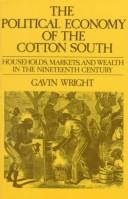
An original and economically rigorous analysis of the role of slavery in generating economic "backwardness." Wright traces key reasons for the South's century-long status as a second-class country-within-a-country, and assesses the legacy of slavery, the material devastation and social upheaval of the Civil War, and the colonial exploitation of the South by northern capital. He maintains that above all the defining feature of the southern economy was the isolation of its labor market from national and international development. On this basis, Wright explains the sharecropping system, the Populist revolt, the South's limited investment in the education of its own people, and the low-skill, low-productivity, "colonial" character of the region's industrial progress. Only the intervention of the Federal Government during the Great Depression, the author argues, destroyed the bases of the South's low-wage economy, led to long-delayed mechanization of the plantation, helped close the North-South wage gap, and created massive out-migration of unskilled labor during and after World War II. With the demise of the plantation regime, the South opened its doors to outside flows of capital and labor.
Ratings & reviews
Log in to rate or review this book.
No written reviews yet.
Discussions
Talk about this book with other readers.
Log in to start a discussion.
No discussions yet.
Editions
-
Format not known Louisiana State University Press 1996 321 pages English ISBN 9780807120989 Open Library


Details & links
- First published
- 1986
- Pages
- 321
- Languages
- Available in 1 language
Where to buy this book: see “Buy this book”
More about this book
Read a sample, borrow it or see other editions → openlibrary.org