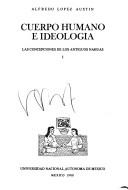
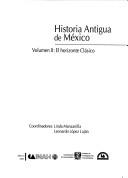
El pasado indígena
- Pages
- 326
- 6 editions
- First published
- 1996
- 2 languages
Join or log in to shelve and rate Free, no password.
Overview
"Divides indigenous peoples into three major units: 1) 'Aridamérica' (including central and southern California, the Sonora coast, the Great Basin of Nevada, Utah, and northwestern Arizona, the Apache area, a small part of southern Texas, and a large portion of northern Mexico), 2) 'Oasisamérica' (covering parts of northern Mexico, southeastern California, all of Arizona, almost all of Utah, more than half of New Mexico, and the southwestern corner of Colorado); and 3) 'Mesoamérica' (defined, in part, as taking in the peoples of 16 linguistic families: Hokano-coahuilteca, Chinanteca, Otopame, Oaxaqueña, Mangueña, Huave, Tlapaneca, Totonaca, Mixe, Maya, Yutoazteca, Tarasca, Cuitlateca, Lenca, Xinca, and Misumalpa). Proceeds with an overview of the Mesoamerican preclassic, classic, epiclassic, and postclassic periods"--Handbook of Latin American Studies, v. 58.
Ratings & reviews
Log in to rate or review this book.
No written reviews yet.
Discussions
Talk about this book with other readers.
Log in to start a discussion.
No discussions yet.
Editions
-
Format not known University of Oklahoma Press 2001 349 pages English ISBN 9780806132143 Open Library
-
Paperback Colegio de Mexico Fideicomiso Historia de Las 1998 305 pages Spanish ISBN 9789681648909 Open Library
-
Format not known Colegio de México, Fideicomiso Historia de las Américas 1996 305 pages Spanish ISBN 9789681648909 Open Library


Details & links
- First published
- 1996
- Pages
- 326
- Languages
- Available in 2 languages
Where to buy this book: see “Buy this book”
More about this book
Read a sample, borrow it or see other editions → openlibrary.org