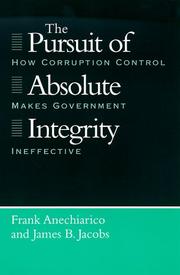
The pursuit of absolute integrity
- Pages
- 274
- 1 edition
- First published
- 1996
- 1 language
Join or log in to shelve and rate Free, no password.
Overview
Anticorruption reforms provide excellent political cover for public officials, but do they really reduce corruption? And do the benefits outweigh the costs? In this comprehensive and controversial case study of anticorruption efforts, Frank Anechiarico and James B. Jacobs show how the proliferating regulations and oversight mechanisms designed to prevent or root out corruption seriously undermine our ability to govern.
Using anticorruption efforts in New York City to illustrate their argument, Anechiarico and Jacobs demonstrate the costly inefficiencies of pursuing absolute integrity. By proliferating dysfunctions, constraining decision makers' discretion, shaping priorities, and causing delays, corruption control - no less than corruption itself - has contributed to the contemporary crisis in public administration.
This book begins a new and vital discourse on how to free public administration from burdensome corruption controls without sacrificing government integrity. It will interest scholars in political science, sociology, public administration, policy studies, and criminology.
Ratings & reviews
Log in to rate or review this book.
No written reviews yet.
Discussions
Talk about this book with other readers.
Log in to start a discussion.
No discussions yet.
Editions

Details & links
- First published
- 1996
- Pages
- 274
- Languages
- Available in 1 language
Where to buy this book: see “Buy this book”
More about this book
Read a sample, borrow it or see other editions → openlibrary.org