Philosophy & ReligionPolitics & Society
Women and the study of Torah
- Pages
- 148
- 1 edition
- First published
- 2001
- 1 language
Join or log in to shelve and rate Free, no password.
Overview
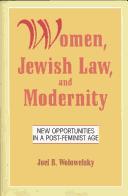
"For the past few decades, manu Orthodox leaders have reacted to the overall friction between some aspects of feminist ideology and halakhah (Jewish las and ethics) by treating suggestions for increased women's participation in religious activities with suspicion. They feared that these proposals, while benign in appearance, could legitimize feminism in the eyes of the halakhic community.".
"It is now time, argues the author, to move past this fear of feminism. We are fast approaching a "post-feminist" era in which accepting certain initiatives originally promoted by feminists no longer carries with it the implications that we accept feminist ideology as a whole. We should not continue to fight yesterday's battles, confusing a genuine desire to grow in Torah with an attack on Torah values.".
"It is obvious to people who have firsthand contact with women engaged in advanced Torah education in Israeli schools like Michlelet Lindenbaum, Matan, or Nishmat or in American schools like Drisha and Stern College that it is the unparalleled high levels of education attained by these women that now drives this concern, not by any particular feminist agenda.".
"This book explores how this drive for increased women's expression in our homes, at life-cycle events, in our synagogues and in our schools can be realized with complete fidelity to halakhah."--BOOK JACKET.
Ratings & reviews
Log in to rate or review this book.
No written reviews yet.
Discussions
Talk about this book with other readers.
Log in to start a discussion.
No discussions yet.
Editions
-
Format not known KTAV/Rubbinical Council of America 2001 148 pages English ISBN 9780881255744 Open Library

Details & links
- First published
- 2001
- Pages
- 148
- Series
- Essays from the pages of Tradition
- Languages
- Available in 1 language
Where to buy this book: see “Buy this book”
More about this book
Read a sample, borrow it or see other editions → openlibrary.org