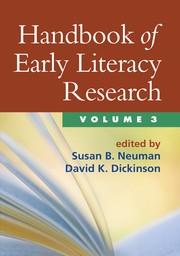
Handbook of early literacy research
- Pages
- 481
- 3 editions
- First published
- 2001
- 1 language
Join or log in to shelve and rate Free, no password.
Overview
The field of early literacy has seen significant recent advances in theory, research, and practice. This volume brings together leading authorities to report on current findings, integrate insights from different disciplinary perspectives, and explore ways to provide children with the strongest possible literacy foundations in the first 6 years of life. The Handbook first addresses broad questions about the nature of emergent literacy, summarizing current knowledge on cognitive pathways, biological underpinnings, and the importance of cultural contexts. Chapters in subsequent sections examine various strands of knowledge and skills that emerge as children become literate, as well as the role played by experiences with peers and families. Particular attention is devoted to the challenges involved in making schools work for all children, including members of linguistic and ethnic minority groups and children living in poverty. Finally, approaches to instruction, assessment, and early intervention are described, and up-to-date research on their effectiveness is presented.
Ratings & reviews
Log in to rate or review this book.
No written reviews yet.
Discussions
Talk about this book with other readers.
Log in to start a discussion.
No discussions yet.
Editions


Details & links
- First published
- 2001
- Pages
- 481
- Languages
- Available in 1 language
Where to buy this book: see “Buy this book”
More about this book
Read a sample, borrow it or see other editions → openlibrary.org