Affirmative action and racial preference
- Pages
- 394
- 1 edition
- First published
- 2003
- 1 language
Join or log in to shelve and rate Free, no password.
Overview
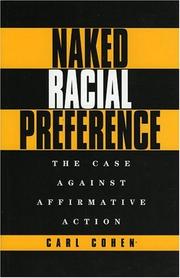
"Carl Cohen, a key figure in the University of Michigan Supreme Court cases, argues that racial preferences are morally wrong - forbidden by the 14[superscript th] Amendment to the Constitution, and explicitly banned by the Civil Rights Act of 1964. He also contends that such preferences harm society in general, damage the universities that use them, and undermine the minorities they were intended to serve. James P. Sterba counters that, far from being banned by the Constitution and the civil rights acts, affirmative action is actually mandated by law in the pursuit of a society that is racially and sexually just. The same Congress that adopted the 14[superscript th] Amendment, he notes, passed race-specific laws that extended aid to blacks. Indeed, there are various kinds of affirmative action - compensation for past discrimination, remedial measures aimed at current discrimination, the guarantee of diversity - and Sterba reviews the Supreme Court cases that build a constitutional foundation for each. Affirmative action, he argues, favors qualified minority candidates, not unqualified ones. Both authors offer concluding comment on the University of Michigan cases decided by the Supreme Court in June 2003"--Jacket.
Ratings & reviews
Log in to rate or review this book.
No written reviews yet.
Discussions
Talk about this book with other readers.
Log in to start a discussion.
No discussions yet.
Editions

Details & links
- First published
- 2003
- Pages
- 394
- Languages
- Available in 1 language
Where to buy this book: see “Buy this book”
More about this book
Read a sample, borrow it or see other editions → openlibrary.org