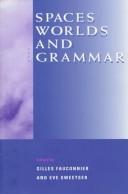
Mappings in thought and language
- Pages
- 205
- 2 editions
- First published
- 1997
- 1 language
Join or log in to shelve and rate Free, no password.
Overview
Meaning in everyday thought and language is constructed at lightning speed. We are not conscious of the staggering complexity of the cognitive operations that drive our simplest behavior. This book examines a central component of meaning construction; the mappings that link mental spaces. A deep result of the research is the fact that the same principles operate at the highest levels of scientific, artistic, and literary thought as do the lower levels of elementary understanding and sentence meaning.
Some key cognitive operations are analogical mappings, conceptual integration and blending, discourse management, induction, and recursion. The analyses are based on a rich array of attested data in ordinary language, humor, action and design, science, and narratives. Phenomena that receive attention include counterfactuals; time, tense, and mood; opacity; metaphor; fictive motion; grammatical constructions; and quantification over cognitive domains.
Ratings & reviews
Log in to rate or review this book.
No written reviews yet.
Discussions
Talk about this book with other readers.
Log in to start a discussion.
No discussions yet.
Editions

Details & links
- First published
- 1997
- Pages
- 205
- Languages
- Available in 1 language
Where to buy this book: see “Buy this book”
More about this book
Read a sample, borrow it or see other editions → openlibrary.org