Jerusalem l'emanazione del gigante albione
- Pages
- 121
- 21 editions
- First published
- 1804
- 2 languages
Join or log in to shelve and rate Free, no password.
Overview
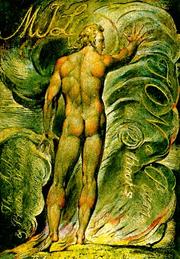
The poem was inspired by the apocryphal story that a young Jesus, accompanied by his uncle Joseph of Arimathea, a tin merchant, travelled to what is now England and visited Glastonbury during the unknown years of Jesus. The legend is linked to an idea in the Book of Revelation describing a Second Coming, wherein Jesus establishes a new Jerusalem. The Christian Church in general, and the English Church in particular, has long used Jerusalem as a metaphor for Heaven, a place of universal love and peace. In the most common interpretation of the poem, Blake implies that a visit by Jesus would briefly create heaven in England, in contrast to the "dark Satanic Mills" of the Industrial Revolution. Blake's poem asks questions rather than asserting the historical truth of Christ's visit. Thus the poem merely implies that there may, or may not, have been a divine visit, when there was briefly heaven in England.
Ratings & reviews
Log in to rate or review this book.
No written reviews yet.
Discussions
Talk about this book with other readers.
Log in to start a discussion.
No discussions yet.
Editions
-
Format not known William Blake Trust/Tate Gallery 1991 302 pages English ISBN 9781854370662 Open Library
-
Format not known William Blake Trust/Princeton University Press 1991 302 pages English ISBN 9780691069357 Open Library
-
Format not known Published by the Trianon Press for the William Blake Trust 1952 115 pages English Open Library
-
Format not known Published by the Trianon Press for the William Blake Trust, London 1951 100 pages English Open Library
-
Format not known Published by the Trianon Press for The William Blake Trust 1951 100 pages English Open Library


Details & links
- First published
- 1804
- Pages
- 121
- Series
- Blake's illuminated books
- Languages
- Available in 2 languages
Where to buy this book: see “Buy this book”
More about this book
Read a sample, borrow it or see other editions → openlibrary.org