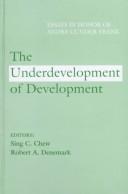
World Ecological Degradation
- Pages
- 224
- 4 editions
- First published
- 2001
- 1 language
Join or log in to shelve and rate Free, no password.
Overview
"Deforestation, soil runoff, salination, pollution. While recurrent themes of the contemporary world, they are not new to us. In this broad sweeping review of the environmental impacts of human settlement and development worldwide over the past 5,000 years, Sing C. Chew shows that these processes are as old as civilization itself. With examples ranging from Ancient Mesopotamia to Malaya, Mycenaean Greece to Ming China, Chew shows that the processes of population growth, intensive resource accumulation, and urbanization in ancient and modern societies almost universally bring on ecological disaster, which often contributes to the decline and fall of that society. He then turns his eye to the development of the modern European world-system and its impact on the environment. Challenging us to change these long-term trends, Chew also traces the existence of environmental conservation ideas and movements over the span of 5,000 years. Can we do it? Look at Chew's evidence of the past five millennia and decide. Ideal for courses in environmental history, anthropology, and sociology, and world-systems theory."--Pub. desc.
Ratings & reviews
Log in to rate or review this book.
No written reviews yet.
Discussions
Talk about this book with other readers.
Log in to start a discussion.
No discussions yet.
Editions


Details & links
- First published
- 2001
- Pages
- 224
- Languages
- Available in 1 language
Where to buy this book: see “Buy this book”
More about this book
Read a sample, borrow it or see other editions → openlibrary.org