Origins of logical empiricism
- Pages
- 392
- 3 editions
- First published
- 1996
- 1 language
Join or log in to shelve and rate Free, no password.
Overview
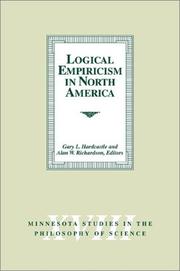
Logical empiricism remains a strong influence in the philosophy of science, despite the discipline's shift toward more historical and naturalistic approaches. This latest volume in the eminent Minnesota Studies in the Philosophy of Science series examines the main features of the intellectual milieu from which logical empiricism sprang, providing the first critical exploration of this context by authors within the Anglo-American analytic tradition of philosophy.
These articles challenge the idea that logical empiricism has its origins in traditional British empiricism, pointing instead to a movement of scientific philosophy that flourished in the German-speaking areas of Europe in the first four decades of the twentieth century.
The intellectual refugees from the Third Reich who brought logical empiricism to North America did so in an environment influenced by Einstein's new physics, the ascension of modern logic, the birth of the social sciences as rivals to traditional humanistic philosophy, and other large-scale social, political, and cultural themes.
Ratings & reviews
Log in to rate or review this book.
No written reviews yet.
Discussions
Talk about this book with other readers.
Log in to start a discussion.
No discussions yet.
Editions
-
Format not known University of Minnesota Press 1997 392 pages English ISBN 9780816628346 Open Library

Details & links
- First published
- 1996
- Pages
- 392
- Languages
- Available in 1 language
Where to buy this book: see “Buy this book”
More about this book
Read a sample, borrow it or see other editions → openlibrary.org