L'église des temps barbares
- Pages
- 624
- 8 editions
- First published
- 1950
- 2 languages
Join or log in to shelve and rate Free, no password.
Overview
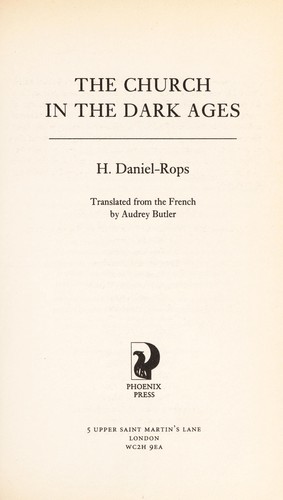
Deals with the Catholic Church in the period c. 350-1050. These are the centuries which saw the end of the Roman Empire in the West; the irruption of the Barbarians; the conversion first to Arianism and then to Catholicism of the Germanic peoples, and the consequent development of their spiritual and intellectual lives; the 'golden age' of Byzantium and the growing rift between it and Rome; the Moslem attack on Christendom and the Islamic conquest of the Holy Places, and Charlemagne's attempt to re-create the Western Empire in a Germanic, Christian form. The volume opens with a study of St. Augustine of Hippo stressing his influence upon the dark centuries which followed his death. This serves as a kind of preface for the rest of the work, which includes, within the general framework of the centuries it describes, detailed examinations of the most important individuals and events therein; these include sections dealing specifically with the two outstanding popes of the period, Leo the Great and Gregory the Great, with saints ranging from St. John Chrysostom and St. Boniface to St. Benedict, and with the principal secular rulers of the epoch -- Justinian and Theodora, Clovis, Heraclius, Irene and, of course, the great Charlemagne.
Ratings & reviews
Log in to rate or review this book.
No written reviews yet.
Discussions
Talk about this book with other readers.
Log in to start a discussion.
No discussions yet.
Editions


Details & links
- First published
- 1950
- Pages
- 624
- Series
- His History of the Church of Christ (book 2)
- Languages
- Available in 2 languages
Where to buy this book: see “Buy this book”
More about this book
Read a sample, borrow it or see other editions → openlibrary.org