Communitas
- Pages
- 248
- 10 editions
- First published
- 1947
- 1 language
Join or log in to shelve and rate Free, no password.
Overview
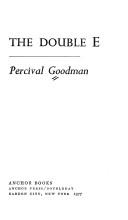
The Goodman brothers see a "community plan" not as a layout of streets and houses, but as the external form of the activity going on. "It is more like a choreography of society in motion and in rest, an arrangement for society to live out its habits and ideals and do its work, directing itself or being directed." They examine in turn the three main types of plans which have emerged in the last hundred years, grouping them into three classes: the green belt, industrial plans, and integrated plans. The Goodmans turn then to their own, and they arrive at three completely different community formulas, with communities for efficient consumption, the elimination of the difference between production and consumption, and planned security with minimum regulation. The authors enjoy themselves working out the architectural implications of their double economy--the "production center" and minimal settlements of the subsistence economy. By the nature of their approach, they are forced to stray out of the field of town-planning into that of economics, with mixed results. However, all their suggestions release a speculative faculty in the reader's brain, and that may be the best approach to forward the building their idealized communities.
Ratings & reviews
Log in to rate or review this book.
No written reviews yet.
Discussions
Talk about this book with other readers.
Log in to start a discussion.
No discussions yet.
Editions


Details & links
- First published
- 1947
- Pages
- 248
- Languages
- Available in 1 language
Where to buy this book: see “Buy this book”
More about this book
Read a sample, borrow it or see other editions → openlibrary.org