Third person
- Pages
- 177
- 1 edition
- First published
- 2012
- 1 language
Join or log in to shelve and rate Free, no password.
Overview
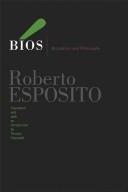
All discourses aimed at asserting the value of human life as such whether philosophical, ethical, or political assume the notion of personhood as their indispensable point of departure. This is all the more true today. In bioethics, for example, Catholic and secular thinkers may disagree on what constitutes a person and its genesis, but they certainly agree on its decisive importance: human life is considered to be untouchable only when based on personhood. In the legal sphere as well the enjoyment of subjective rights continues to be increasingly linked to the qualification of personhood, which appears to be the only one capable of bridging the gap between human being and citizen, right and life, and soul and body opened up at the very origins of Western civilization.The radical and alarming thesis put forward in this book is that the notion of person is unable to bridge this gap because it is precisely what creates this breach. Its primary effect is to create a separation in both the human race and the individual between a rational, voluntary part endowed with particular value and another, purely biological part that is thrust by the first into the inferior dimension of the animal or the thing. In opposition to the performative power of the person, whose dual origins can be traced back to ancient Rome and Christianity, Esposito pursues his strikingly original and innovative philosophical inquiry by inviting reflection on the category of the impersonal: the third person, in removing itself from the exclusionary mechanism of the person, points toward the orginary unity of the living being.
Ratings & reviews
Log in to rate or review this book.
No written reviews yet.
Discussions
Talk about this book with other readers.
Log in to start a discussion.
No discussions yet.
Editions

Details & links
- First published
- 2012
- Pages
- 177
- Languages
- Available in 1 language
Where to buy this book: see “Buy this book”
More about this book
Read a sample, borrow it or see other editions → openlibrary.org