Forgery and counter-forgery
- Pages
- 628
- 1 edition
- First published
- 2014
- 1 language
Join or log in to shelve and rate Free, no password.
Overview
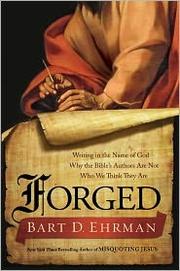
A comprehensive study of early Christian pseudepigrapha. Ehrman argues that ancient critics-- pagan, Jewish, and Christian-- understood false authorial claims to be a form of literary deceit, and thus forgeries. Ehrman considers the extent of the phenomenon, assesses the criteria ancient critics applied to expose forgeries and the techniques forgers used to avoid detection. Shining light on an important but overlooked feature of the early Christian world, Ehrman explores the possible motivations of the deceivers who produced these writings, situating their practice within ancient Christian discourses on lying and deceit.
Ratings & reviews
Log in to rate or review this book.
No written reviews yet.
Discussions
Talk about this book with other readers.
Log in to start a discussion.
No discussions yet.
Editions

Details & links
- First published
- 2014
- Pages
- 628
- Languages
- Available in 1 language
Where to buy this book: see “Buy this book”
More about this book
Read a sample, borrow it or see other editions → openlibrary.org