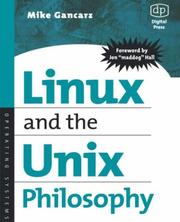
Unix Philosophy
- Pages
- 200
- 4 editions
- First published
- 1995
- 1 language
Join or log in to shelve and rate Free, no password.
Overview
* Deals with powerful concepts in a simple way * Highlights important characteristics of Operating systems and other abstract entities in a new way * Explores the tenets of the UNIX operating system philosophy
Unlike so many books that focus on how to use UNIX, The UNIX Philosophy concentrates on answering the questions: `Why use UNIX in the first place?'. Readers will discover the rationale and reasons for such concepts as file system organization, user interface and other system characteristics. In an informative, non-technical fashion, The UNIX Philosophy explores the general principles for applying the UNIX philosophy to software development. This book describes complex software design principles and addresses the importance of small programs, code and data portability, early prototyping, and open user interfaces. The UNIX Philosophy is a book to be read before tackling the highly technical texts on UNIX internals and programming. Written for both the computer layperson and the experienced programmer, this book explores the tenets of the UNIX operating system in detail, dealing with powerful concepts in a comprehensive, straightforward manner.
Ratings & reviews
Log in to rate or review this book.
No written reviews yet.
Discussions
Talk about this book with other readers.
Log in to start a discussion.
No discussions yet.
Editions

Details & links
- First published
- 1995
- Pages
- 200
- Languages
- Available in 1 language
Where to buy this book: see “Buy this book”
More about this book
Read a sample, borrow it or see other editions → openlibrary.org