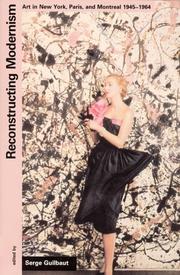
How New York stole the idea of modern art
- Pages
- 277
- 3 editions
- First published
- 1983
- 1 language
Join or log in to shelve and rate Free, no password.
Overview
Why was New York abstract expressionism so successful after World War II? To answer that question, Serge Guilbaut takes a controversial look at the complicated, intertwining relationship among art, politics, and ideology. He explores the changing New York and Paris art scenes of the Cold War period, the rejection by artists of political ideology, and the coopting by left-wing writers and politicians of the artistic revolt.
"A provocative interpretation of the political and cultural history of the early cold war years. . . . By insisting that art, even art of the avant-garde, is part of the general culture, not autonomous or above it, he forces us to think differently not only about art and art history but about society itself."
Ratings & reviews
Log in to rate or review this book.
No written reviews yet.
Discussions
Talk about this book with other readers.
Log in to start a discussion.
No discussions yet.
Editions

Details & links
- First published
- 1983
- Pages
- 277
- Languages
- Available in 1 language
Where to buy this book: see “Buy this book”
More about this book
Read a sample, borrow it or see other editions → openlibrary.org