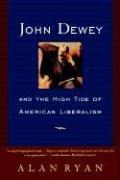
John Dewey and the high tide of American liberalism
- Pages
- 414
- 1 edition
- First published
- 1995
- 1 language
Join or log in to shelve and rate Free, no password.
Overview
When John Dewey died in 1952, he was memorialized as America's most famous philosopher, revered by liberal educators and deplored by conservatives, but universally acknowledged as his country's intellectual voice. Many things conspired to give Dewey an extraordinary intellectual eminence: He was immensely long-lived and immensely prolific; he died in his ninety-third year, and his intellectual productivity hardly slackened until his eighties.
Professor Alan Ryan offers new insights into Dewey's many achievements, his character, and the era in which his scholarship had a remarkable impact. He investigates the question of what an American audience wanted from a public philosopher - from an intellectual figure whose credentials came from his academic standing as a philosopher, but whose audience was much wider than an academic one.
Ran argues that Dewey's "religious" outlook illuminates his politics much more vividly than it does the politics of religion as ordinarily conceived. He examines how Dewey fit into the American radical tradition, how he was and was not like his transatlantic contemporaries, why he could for so long practice a form of philosophical inquiry that became unfashionable in England after 1914 at the latest.
Ratings & reviews
Log in to rate or review this book.
No written reviews yet.
Discussions
Talk about this book with other readers.
Log in to start a discussion.
No discussions yet.
Editions

Details & links
- First published
- 1995
- Pages
- 414
- Languages
- Available in 1 language
Where to buy this book: see “Buy this book”
More about this book
Read a sample, borrow it or see other editions → openlibrary.org