The revenge of the past
- Pages
- 200
- 1 edition
- First published
- 1993
- 1 language
Join or log in to shelve and rate Free, no password.
Overview
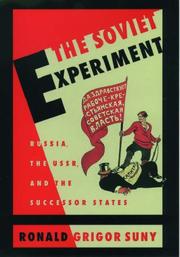
"This timely and pathbreaking work shows how and why the dramatic collapse of the Soviet Union was caused in large part by nationalism, that is, by the demands of the subject nationalities of the Soviet Union for independence and autonomy. Unified in their hostility to the Kremlin's authority, the fifteen constituent Union Republics, including the Russian Republic, declared their sovereignty and began to build state institutions of their own. The demands of the nationalities of each republic became the dominant motifs in the programs of both Communist and non-Communist leaders. With the failure of the August 1991 putsch attempt, sovereign republics obtained their complete independence. Nationalism reigned supreme." "The book has a dual purpose. The first is to explore the formation of nations within the Soviet Union, the policies of the Soviet Union toward non-Russian peoples, and the ultimate contradictions between those policies and the development of nations. The second, more general purpose is to show how nations have grown in the twentieth century. The author argues that nations are "imagined communities," the products of historical processes and the languages and discourses of nationalism, rather than being "natural," eternal, or primordial identities. The principle of nationality that buried the Soviet Union and destroyed its empire in Eastern Europe continues to shape and reshape the configuration of states and political movements among the new independent countries of the vast East European-Eurasian region."--BOOK JACKET.
Ratings & reviews
Log in to rate or review this book.
No written reviews yet.
Discussions
Talk about this book with other readers.
Log in to start a discussion.
No discussions yet.
Editions

Details & links
- First published
- 1993
- Pages
- 200
- Languages
- Available in 1 language
Where to buy this book: see “Buy this book”
More about this book
Read a sample, borrow it or see other editions → openlibrary.org