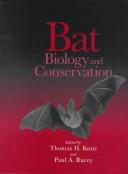
Bat ecology
- Pages
- 784
- 2 editions
- First published
- 2003
- 1 language
Join or log in to shelve and rate Free, no password.
Overview
In recent years researchers have discovered that bats play key roles in many ecosystems as insect predators, seed dispersers, and pollinators. Bats also display astonishing ecological and evolutionary diversity and serve as important models for studies of a wide variety of topics, including food webs, biogeography, and emerging diseases. In Bat Ecology, world-renowned bat scholars present an up-to-date, comprehensive, and authoritative review of this ongoing research. The first part of the book covers the life history and behavioral ecology of bats, from migration to sperm competition and natural selection. The next section focuses on functional ecology, including ecomorphology, feeding, and physiology. In the third section, contributors explore macroecological issues such as the evolution of ecological diversity, range size, and infectious diseases (including rabies) in bats. A final chapter discusses conservation challenges facing these fascinating flying mammals.
Ratings & reviews
Log in to rate or review this book.
No written reviews yet.
Discussions
Talk about this book with other readers.
Log in to start a discussion.
No discussions yet.
Editions


Details & links
- First published
- 2003
- Pages
- 784
- Languages
- Available in 1 language
Where to buy this book: see “Buy this book”
More about this book
Read a sample, borrow it or see other editions → openlibrary.org