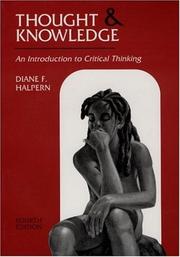
Thought and knowledge
- Pages
- 467
- 10 editions
- First published
- 1984
- 1 language
Join or log in to shelve and rate Free, no password.
Overview
When we consider that many of the people alive today will someday be working in jobs that do not yet exist, and that the explosion of information in our world means that today's knowledge will quickly become outdated, two goals for eduction emerge: learning how to learn and how to think critically about information that changes at a rapid rate. Neither education nor business as usual will provide adequately thoughtful perspectives and creative solutions to the problems society faces today.
A genuine commitment to an educated thinking populace will. This book, the third edition of Diane Halpern's best-selling text, was written as tangible evidence of that commitment. In it, the author applies the theories and research of cognitive psychology to the development of critical thinking and learning skills. In addition to its rigorous scholarly grounding, the book is distinguished by its clear writing style, humorous tone, and numerous practical examples and anecdotes.
The book features new and expanded coverage of topics including: analyzing visual arguments; asking questions as a means of understanding complex information; accessing information in problem solving, decision making, and argument analysis; and thinking critically about controversial research. The lessons from this text are brought home in the workbook, Thinking Critically about Critical Thinking, available separately. An instructor's manual is also available from the publisher.
Ratings & reviews
Log in to rate or review this book.
No written reviews yet.
Discussions
Talk about this book with other readers.
Log in to start a discussion.
No discussions yet.
Editions
-
Format not known Lawrence Erlbaum Associates, Publishers 2003 467 pages English ISBN 9780805839654 Open Library


Details & links
- First published
- 1984
- Pages
- 467
- Languages
- Available in 1 language
Where to buy this book: see “Buy this book”
More about this book
Read a sample, borrow it or see other editions → openlibrary.org