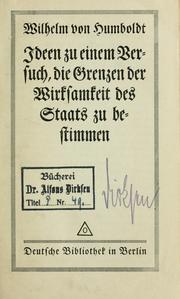
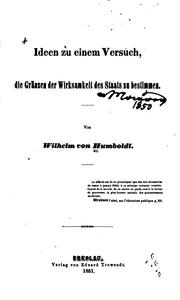
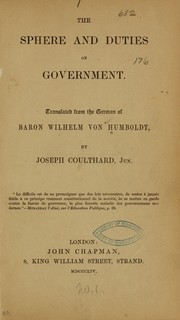
Ideen zu einem Versuch die Grenzen der Wirksamkeit des Staats zu bestimmen
- Pages
- 191
- 6 editions
- First published
- 1841
- 2 languages
Join or log in to shelve and rate Free, no password.
Overview
The Limits of State Action, by "Germany's greatest philosopher of freedom," as F. A. Hayek called him, has an exuberance and attention to principle that makes it a valuable introduction to classical liberal political thought. Humboldt uniquely combines the ancient concern for human excellence and the modern concern for what has come to be known as negative liberty. Neither natural rights-based (as the term is usually understood) nor explicitly utilitarian, Humboldt's argument holds that individual self-development can flower to the maximum extent only when governmental activity is limited to providing security (i.e., preventing harm to others). He discusses criteria for permitting the state to limit individual actions and suggests ways of confining the state to its proper bounds. In a time when scholars throughout the world are reexamining the basis of political and social structure, Humboldt's arguments against state promotion of citizen welfare and state interference with private acts make this book especially relevant. -- from back cover.
Ratings & reviews
Log in to rate or review this book.
No written reviews yet.
Discussions
Talk about this book with other readers.
Log in to start a discussion.
No discussions yet.
Editions


Details & links
- First published
- 1841
- Pages
- 191
- Languages
- Available in 2 languages
Where to buy this book: see “Buy this book”
More about this book
Read a sample, borrow it or see other editions → openlibrary.org