The Wannsee Conference and the Final Solution
- Pages
- 211
- 3 editions
- First published
- 2002
- 1 language
Join or log in to shelve and rate Free, no password.
Overview
The historical roots of policies that led to the deaths of millions are traced in this thoughtful examination of the Nazis' businesslike planning of genocide at the notorious 1942 conference.
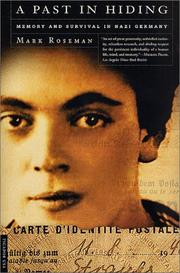
But the path to Wannsee may have been less direct than is commonly thought, argues Roseman (History/Univ. of Southampton; A Past in Hiding, 2001). Although Adolf Hitler's violent anti-Semitic outpourings in Mein Kampf (1924) might suggest that the Nazi destruction of European Jewry was the culmination of a methodically blueprinted plan conceived long before the start of WWII, Roseman dismisses the book’s talk of Jewish “extermination” as overheated rhetoric. Initially, he points out, Hitler encouraged Jewish emigration through terror and viciously discriminatory legal measures; later, the Führer discussed a possible Jewish colony in Africa. After the war began, the Nazis pursued a program of deporting German, Polish, and Soviet Jews that turned increasingly murderous and gradually widened under the pressures of total war into a policy of mass murder. By January 20, 1942, when police chief Reinhard Heydrich and his colleagues from a variety of Nazi agencies gathered at Wannsee, the decision had already been made, either by Hitler himself or by others with his knowledge, to pursue a “final solution” to “the Jewish question.” The role of conference participants, Roseman speculates, was essentially “to listen and to nod” as Heydrich described a macabre plan to work Jews to death and kill off any survivors. Heydrich’s principal goal, Roseman asserts, was to establish the primacy of his secret police over the Reich's Jewish policies and to ensure the complicity of other bureaucrats. Heydrich got much of what he wanted; after the meeting he commenced implementing the horrific policy outlined at Wannsee, confident that other Nazis would give his agency a free hand. “Wannsee itself was not the moment of decision,” Roseman concludes, but it “cleared the way for genocide.”
A chilling keyhole glimpse of Nazi evil’s bureaucratic banality.
Ratings & reviews
Log in to rate or review this book.
No written reviews yet.
Discussions
Talk about this book with other readers.
Log in to start a discussion.
No discussions yet.
Editions


Details & links
- First published
- 2002
- Pages
- 211
- Languages
- Available in 1 language
Where to buy this book: see “Buy this book”
More about this book
Read a sample, borrow it or see other editions → openlibrary.org