Tahāfut al-falāsifah
- Pages
- 260
- 5 editions
- First published
- 1962
- 4 languages
Join or log in to shelve and rate Free, no password.
Overview
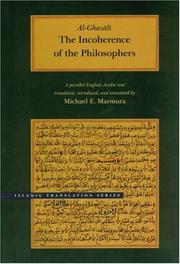
The Incoherence of the Philosophers ranks among the most important works of one of the most fascinating thinkers in the history of Islam. Born in the eastern Iranian city of Tus in 450 A.H. (1058 C.E.), Abu Hamid Muhammad al-Ghazali also died there, relatively young, in 505 A.H. (1111 C.E.). Between those two dates, however, he established himself as a pivotal figure throughout the Islamic world.
The Incoherence of the Philosophers - itself pitched at a very sophisticated philosophical level - contends that, although Muslim philosophers such as al-Farabi and Ibn Sina (Avicenna) boasted of absolutely unassailable arguments on crucial matters of theology and metaphysics, they could not, in fact, deliver on their claims. Additionally, maintained al-Ghazali, some of their assertions represented mere disguised heresy and unbelief.
The great twelfth-century Andalusian philosopher and Aristotle commentator Ibn Rushd (Averroes) attempted to refute al-Ghazali's critique in his own book The Incoherence of the Incoherence, but it remains widely read and influential today.
Ratings & reviews
Log in to rate or review this book.
No written reviews yet.
Discussions
Talk about this book with other readers.
Log in to start a discussion.
No discussions yet.
Editions
Details & links
- First published
- 1962
- Pages
- 260
- Languages
- Available in 4 languages
Where to buy this book: see “Buy this book”
More about this book
Read a sample, borrow it or see other editions → openlibrary.org