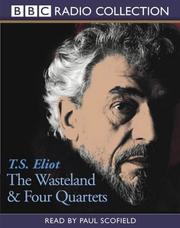
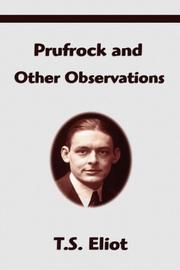
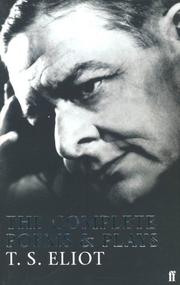
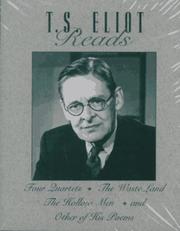
Thomas Stearns Eliot was a poet, essayist and playwright. He was a leading figure of modernist poetry in the English language where he altered the art through his writing style, verse structure and use of pessimistic language. Awarded the 1948 Nobel Prize in Literature, he is considered one of the greatest poets of the English language. He is also noted for his critical essays, which often re-evaluated long-held cultural beliefs.
From Wikipedia · CC BY-SA 4.0
99 books in our catalogue.
Standalone books
Pensées
Blaise Pascal, Blaise Perier, H. F. Stewart, Margival Henri, Philippe Sellier, T. S. Eliot, William Finlayson Trotter
The Poetry of Cats
Eleanor Farjeon, Elizabeth Jane Coatsworth, Harold Monro, Louis MacNeice, Samuel Carr, Ted Hughes, Thomas Hardy, T. S. Eliot, Walter De la Mare, William Butler Yeats
Essays of the masters
Anatole France, Charles Dickens, E. M. Forster, Fiódor Dostoievski, Gustave Flaubert, Honoré de Balzac, Joseph Conrad, T. S. Eliot, W. H. Auden, William Faulkner
Andrew Marvell
Earl Roy Miner, Geoffrey H. Hartman, George deForest Lord, Harold E. Toliver, John Hollander, John M. Wallace, John S. Coolidge, M. J. K. O'Loughlin, T. S. Eliot
Criticism in America
Ernest Augustus Boyd, George Edward Woodberry, H. L. Mencken, Irving Babbitt, Joel Elias Spingarn, Stuart Pratt Sherman, T. S. Eliot, Van Wyck Brooks, William Crary Brownell
Discursos Premios Nobel
Bertrand Russell, Eugenio Montale, Gabriela Mistral, George Seferis, Jaroslav Seifert, John Steinbeck, Nadine Gordimer, T. S. Eliot, William Golding, Wole Soyinka